ART WORK
Artwork
Hotel GrandBach Tokyo Ginza, which opened on the site of the former Kanō school painting academy, offers artworks inspired by the Kanō school and J.S. Bach, the origin of the hotel's name, from the entrance through all 144 guest rooms.
1F
Entrance
Four Seasons Flowers and Birds Screen
Collection of Itabashi Art Museum
Kanō Masanobu, 7th head of the Kobikichō Kanō school, Four Seasons Flowers and Birds Screen, detail
Glass color etching based on a work by Kanō Korenobu, the 7th-generation master of the Kanō school.
1F
Entrance
Untitled
W 2800 × H 1000 mm Steel
Inspired by J.S. Bach's "Italian Concerto in F major, BWV 971, Movement 1," created by cutting out a single plate.
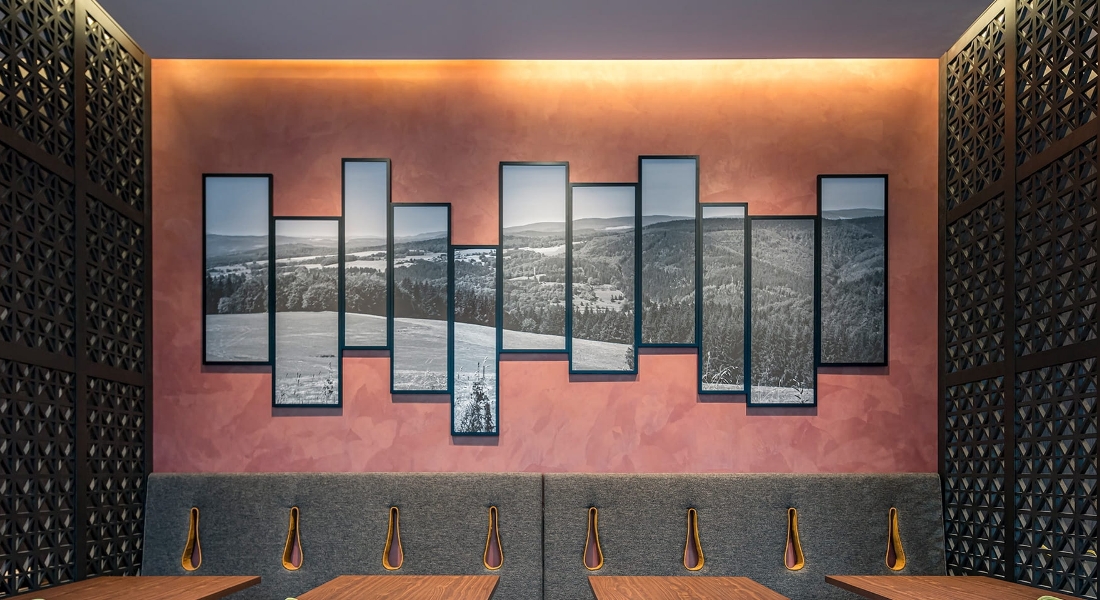
1F
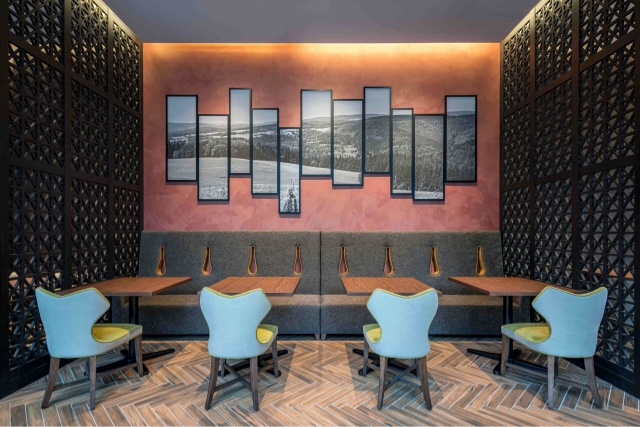
Restaurant
Untitled
Framed (frame W 4000 mm) Wood frame
The Thuringian Forest in Thuringia, central Germany, where J.S. Bach was born and raised, is a richly forested low mountain range stretching approximately 150 km in length and 35 km in width.
An artwork as homage to the life of J.S. Bach, the "Father of Music," who lived with the Thuringian Forest.
2F
Front Desk
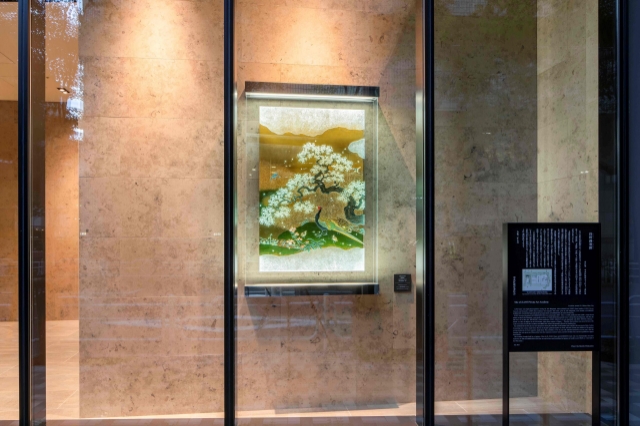
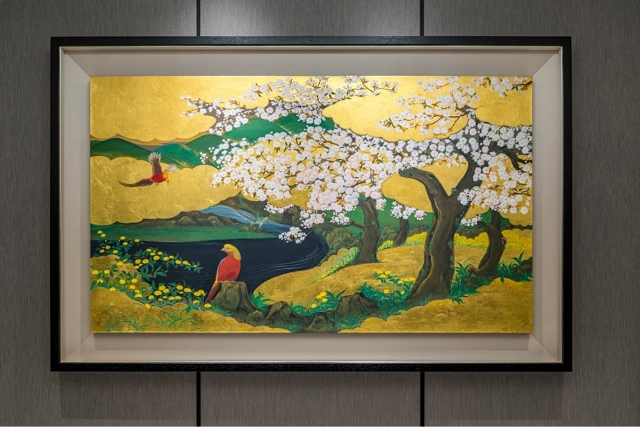
Cherry Blossoms of Yoshino and Golden Pheasant
Satoshi Nagai
W 1550 × H 900 mm (artwork section) Foil, pigment
A Japanese painting by a contemporary artist inspired by the double-flowered cherry blossoms in "Yoshino Landscape Screen" by Kanō Tsunenobu. With gorgeous cherry blossoms and golden pheasants as the centerpiece, rivers and mountains appear between the clouds of gold leaf, creating a landscape with depth.
2F
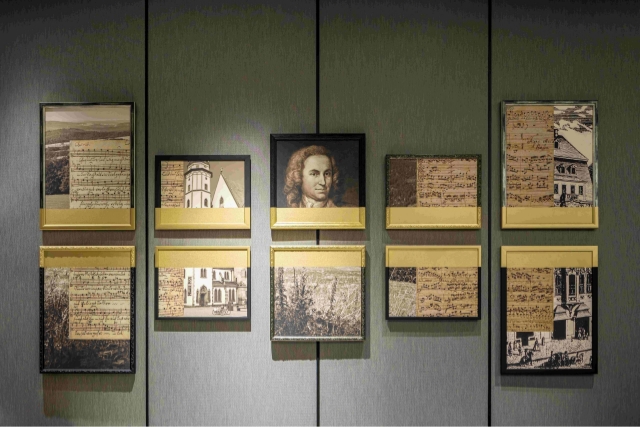
Bar & Lounge
Untitled
J.S. Bach was known as a coffee lover. This piece is a collage of the comic operetta “Coffee Cantata” (BWV211), composed during Bach’s Leipzig period, the “Zimmermann’s Coffee House”, which became a landmark of the city, and the churches of Leipzig. The gold lines serve as a connection between Bach’s era and the present.
2F
Bar & Lounge
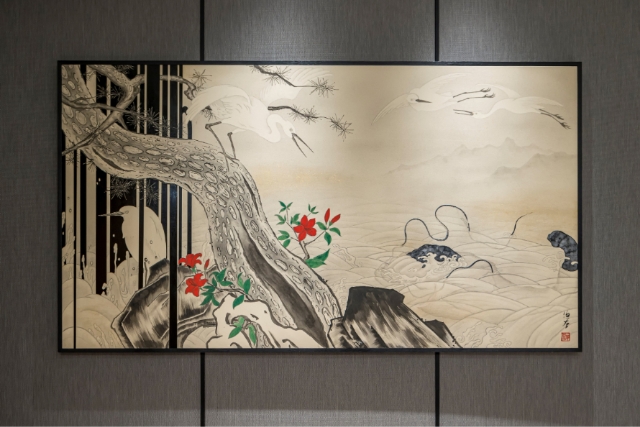
Untitled
Yuta Niwa
W 1800 × H 1000 mm
A Japanese painting in the Kanō school style by a contemporary artist, based on the composition of "Four Seasons Flowers and Birds" by Kanō Motonobu, a Muromachi-period painter and second-generation master of the Kanō school. This artwork features a black and white motif: the black catfish, a symbol of natural disasters and the white heron, known in the Kojiki as a “messenger of the gods”. The lower section depicts flowers and birds featuring the Chūō Ward flower, the mountain azalea. The great catfish that has dwelt in Japan since ancient times awakens from slumber, and the white heron appears to sound an alarm against incoming Western thought. "I painted this imagining Tokyo when its natural environment still existed" (artist's statement).
2F
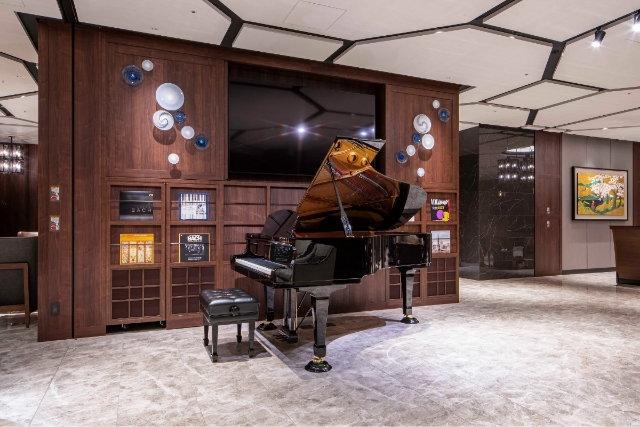
Lobby & Lounge
Untitled
Yutaro Kijima
Glass relief
Glass art expressing the spread of music and sound. The spatial design is the work of a glass artist who states, "Stories and imagination are the starting point, and even if the outcome takes form, it is merely a medium for creating relationships and atmosphere with the subject."
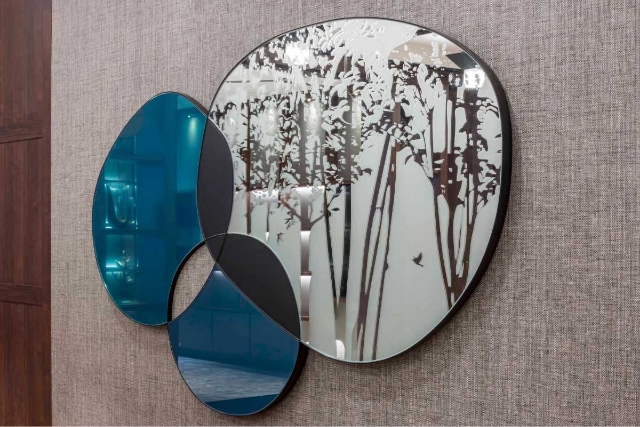
2F
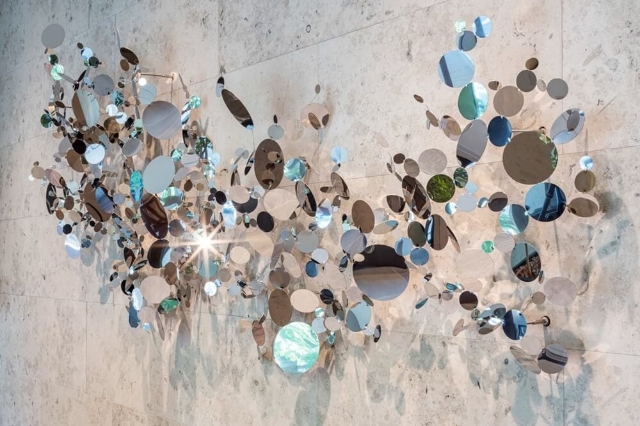
Boardroom
Untitled
A mirror art expressing the forests and lakes of Thuringia. The Thuringian Forest in Thuringia, central Germany, where J.S. Bach was born and raised, is a richly forested low mountain range stretching approximately 150 km in length and 35 km in width.
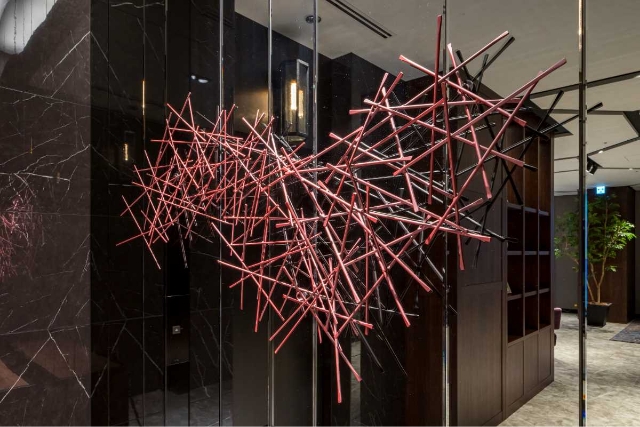
2F
Elevator Hall
Prelude
W 1230 × D 150 × H 660 mm Metal perspectives
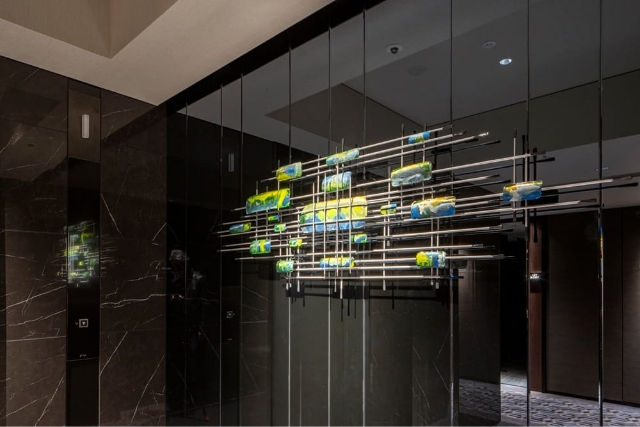
Artworks expressing the seven regions where J.S. Bach lived are displayed in the elevator halls on each floor. This work on the reception floor sets the stage for the "beginning of your journey" at Hotel GrandBach Tokyo Ginza.
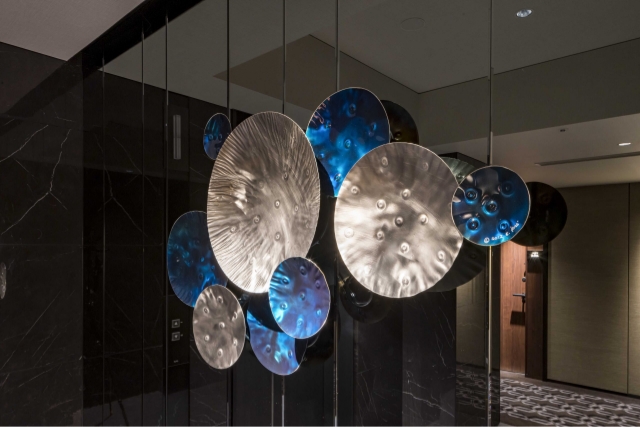
3-4F
Modulation ~Lüneburg・Eisenach~
W 890 × D 130 × H 630 mm Painted steel
Inspired by the bold Fantasia and Fugue in G minor, one of the greatest masterpieces representing Bach's organ works.
5-6F
Concatenation ~Arnstadt~
W 1100 × D 60 × H 560 mm Metal perspectives
Inspired by the Thuringian Forest in Arnstadt, an old city in central Germany.
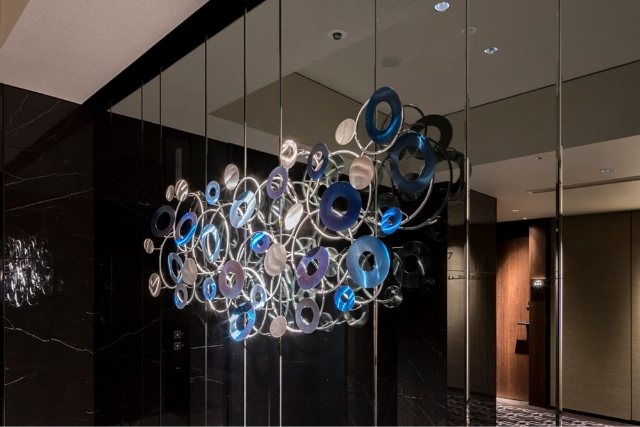
7F
Blue Festival ~Lübeck~
W 1120 × D 80 × H 610 mm Painted steel (painted steel)
Inspired by a journey to the Baltic Sea and Lübeck, a UNESCO World Heritage city in northern Germany.
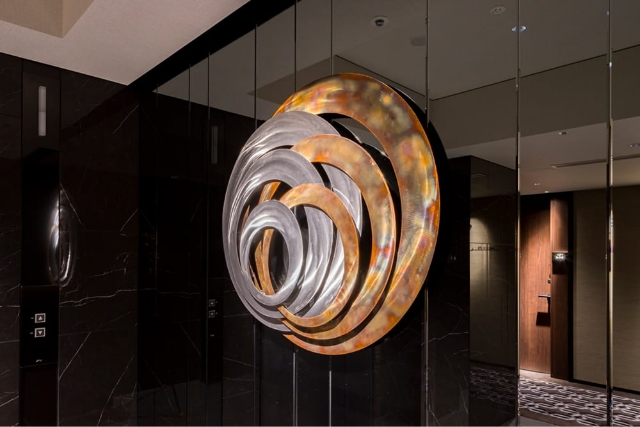
8-9F
Hollow ~Mühlhausen~
W 870 × D 70 × H 770 mm Painted steel
Inspired by the church cantatas of Mühlhausen, where Bach served as an organist for one year.
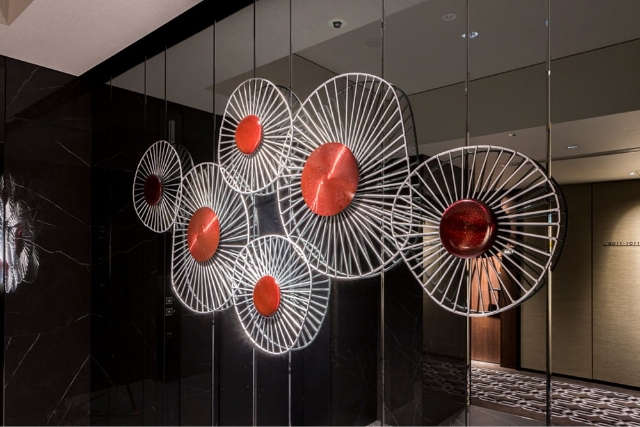
10-11F
Spoke ~Weimar~
W1500 x D50 x H800mm metal perspectives (metal perspectives)
After taking a position as a court organist in Weimar, Bach composed many organ works there. This piece evokes the flow of the organ’s sound.
12-13F
Perspective ~Köthen~
W11300 x D50 x H700mm metal perspectives (metal perspectives)
Inspired by Bach’s Köthen period (ages 32 to 38), including his signature work Brandenburg Concerto No. 5, and by the nature of Köthen.
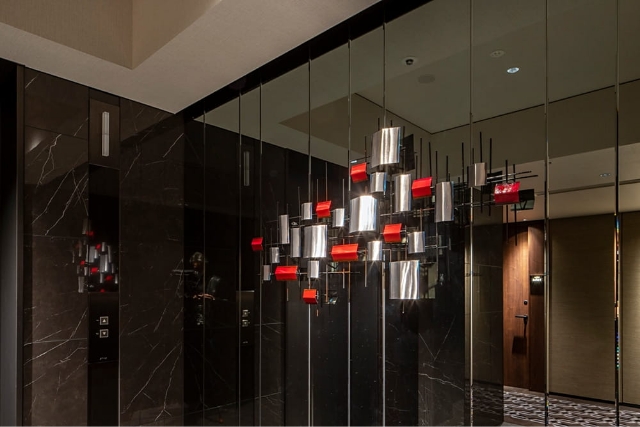
14-15F
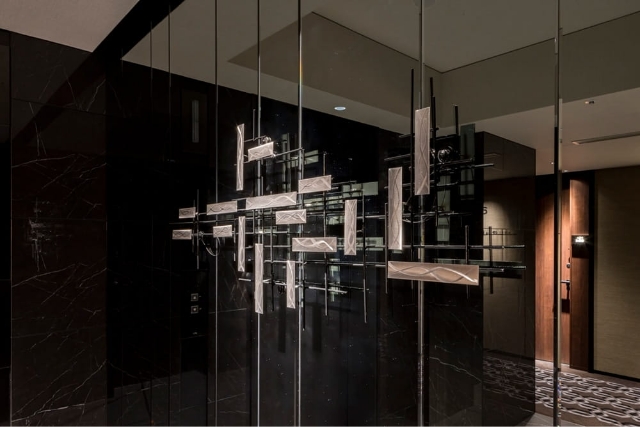
Lattice ~Leipzig~
W1520 x D90 x H530mm Hand-painted cold roll steel (hand-painted cold roll steel)
Inspired by the arrangement of BWV 1068, “Air on the G String,” composed during Bach’s Leipzig period. The G string is the lowest of the violin’s four strings, and because the piece can be played on this string alone, it is called “Air on the G String.”